Lake Okeechobee (or Lake O) can be considered “Florida’s Inland Sea,”, as it is the largest lake in the southeastern United States and is located at the center of Florida’s Everglades ecosystem. Before heavy development in the 19th century, Lake O provided freshwater to the Everglades ecosystem to its south. Now the lake has been permanently altered by a series of major drainage projects which allow canals to drain the water to sustain large South Florida urban communities and agriculture.
Unfortunately, because of the increasing development, nutrient pollution and degrading water quality, cyanobacterial based harmful algal blooms (or cyanoHABs) have now become a common occurrence in Lake Okeechobee. In recent decades, these bloom events have increased in both abundance and prevalence. However, unequivocal causes for the blooms have not yet been identified.
Four years ago, the molecular microbiology and genomics (MMG) laboratory at the Guy Harvey Oceanographic Center (GHOC) and the Department of Biological Sciences (DoBS) in Halmos College of Arts and Sciences and Guy Harvey Oceanographic Research Center (HCAS) was commissioned to investigate the microbial community structure of HABs through a grant from the Army Corp of Engineers, Aquatic Nuisance Species Research Program (ANSRP). Working with the colleagues at the Florida Gulf Coast and the US Geological Society, the MMG has now generated millions of DNA sequence reads of the freshwater bacterial communities from 19 sites around Lake O.
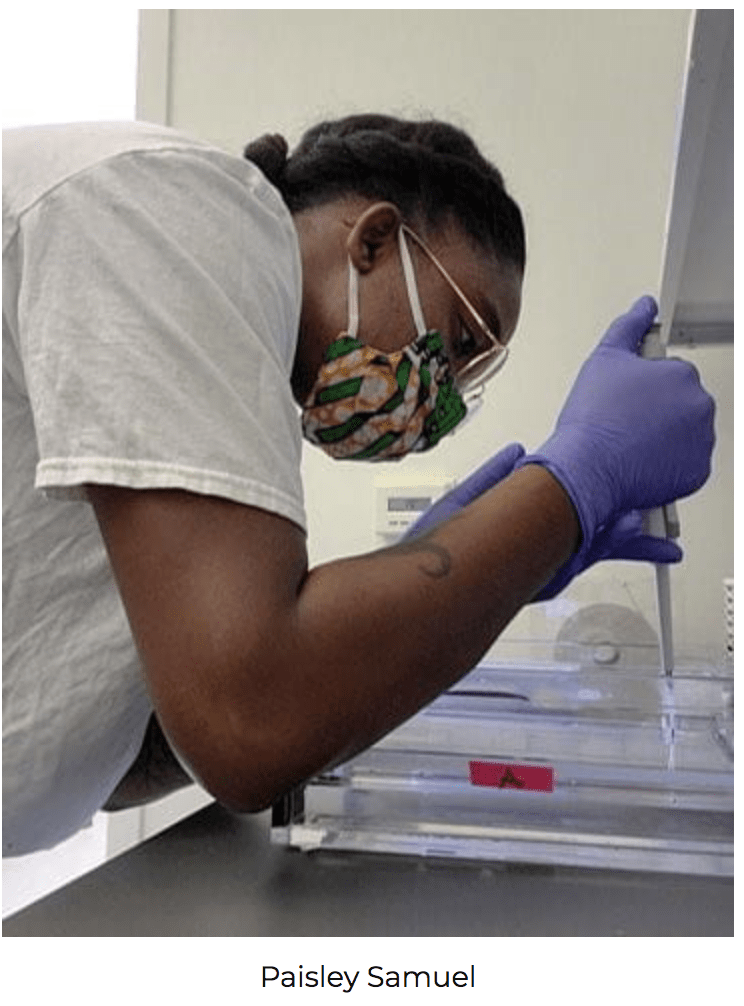
Paisley has recently graduated from Halmos and the MMG laboratory, and presented a portion of her thesis research in a talk titled “Effects of Cyanobacteria Harmful Algal Blooms on the Microbial Community within Lake Okeechobee, FL” to a professional audience at this year’s Greater Everglades Ecosystem Restoration (GEER) meeting in Coral Springs (https://conference.ifas.ufl.edu/geer/). Her attendance at the meeting was generously sponsored by the South Florida and Caribbean Cooperative Ecosystems Studies Unit (SFC CESU) which “was established in 2000 under the leadership of the Department of the Interior and has led to the partnership of nine federal agencies and 21 academic institutions and non-government organizations.”
 Lopez Lab @ NSU