PI Lopez was interviewed by the Miami Herald , WMNF radio and NBC Miami to discuss the current bleaching along reefs of the Kristin Jacobs Coral Aquatic Preserve (KJCAP). In conjunction with National Coral Reef Institute (NCRI) colleagues, Ronen Liberman and Nick Jones, a bleaching watch has been in effect ever since the extreme 2023 marine heat wave. In that event, Florida Keys corals were especially hit with some temperatures soaring above 100F (37C) in shallow areas, while Broward reefs escaped. However, this summer 2025 the relatively flat seas combined with high temperatures this summer have led to sea surface temperatures closer to the 30-31C bleaching threshold in Broward County. Dr. Liberman began surveying the KJCAP in earnest in September, and found several octocoral species showing signs of bleaching. He also recently published an octocoral meta-analyses of Florida’s Coral Reefs from 2013-2023. In general, many octocoral species tend to resist high temperatures and bleaching more than stony corals. However, for most of this year, evidence has indicated that the world is in its fourth global bleaching event. The finding that many octocorals are bleaching, now a focus of multiple NCRI projects, further supports the massive global bleaching phenomenon. Lopez reminded the media about the cliche’ of corals being the marine equivalent of the “canary in the coal mine” that warns of imminent danger. Moreover, since global coral bleaching dates back to the late 1990’s, bleaching signs should resemble more of a loud, visible alarm clock for climate changes that the world collectively keeps hitting the snooze button.
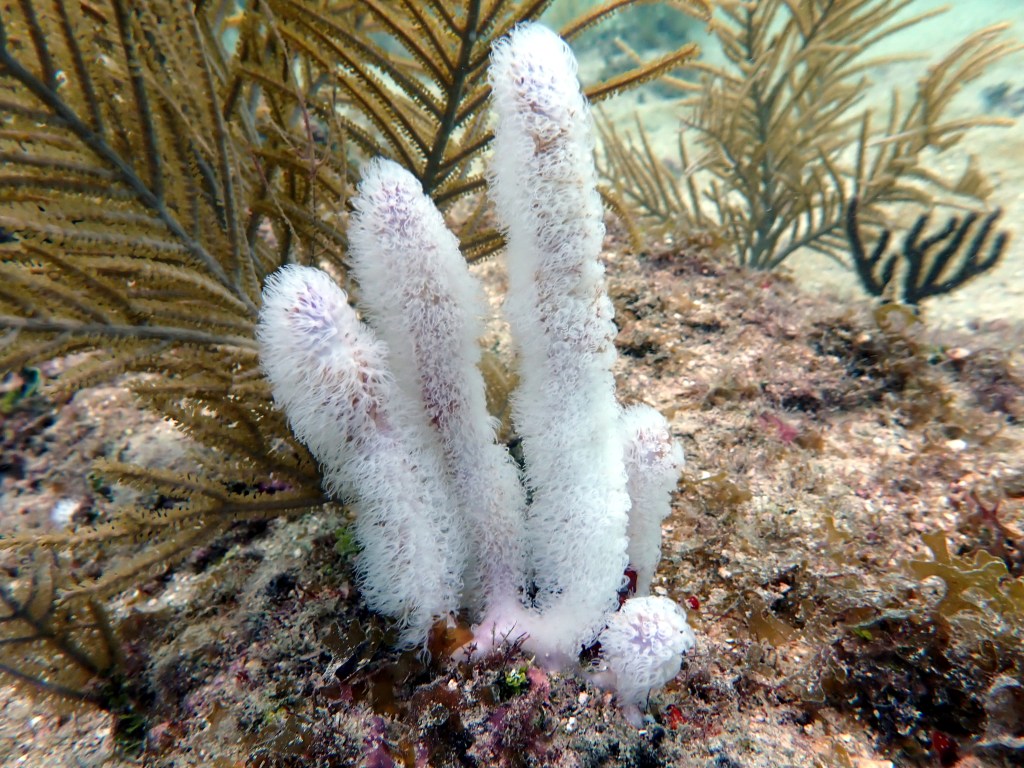
Bleaching of Briareum asbestinum in October 2025 on nearshore Broward reefs. Photo by Ronen Liberman
 Lopez Lab @ NSU
