
Jose (Joe) Lopez, Ph.D.
Professor, Nova Southeastern University
Principle Investigator
I earned a BS at Georgia Tech, an MS at Florida State University, and my doctorate at George Mason University studying the evolution of mitochondrial DNA and its transpositions (Numt) in feline nuclear genomes under Stephen J. O’Brien. I then applied his training in postdoctoral appointments at the Smithsonian Tropical Research Institute with Nancy Knowlton characterizing the Orbicella annularis coral sibling species complex at the Smithsonian Tropical Research Institute in Panama, and sponge genetics at Harbor Branch Oceanographic Institute with Shirley Pomponi. The latter introduced me to investigate deepwater marine systems. Since 2007, our laboratory at Nova Southeastern University focuses on the genomic sequences from marine organisms and essential microbes in diverse projects. Our lab was a partner in the Porifera Tree of Life (PorToL) project to study the systematics of sponges. We are trying to better understand food webs and microbial distributions in the deep ocean through the DEEPEND project after the Deepwater Horizon oil spill. This includes characterizing “symbiotic” interactions (between host and beneficial microbes living together in sponges, corals, humans and fish (see bioluminescent symbionts of anglerfish. I also helped found the Global Invertebrate Genomics Alliance (GIGA) in 2013 which focuses on the genomes of diverse marine invertebrates comprising the Tree of Life. GIGA is now part of the Earth BioGenome Project (EBP) and the Aquatic Symbiosis Genome Project that aim to sequence most of the planet’s eukaryotic species. We have also focused on inland Florida microbial communities which may be linked harmful algal blooms (HABs) that reach coral reefs and degrade water quality.
Postdoctoral Researchers

Matías Gómez Corrales, M.Sc., Ph.D. Postdoctoral Research Fellow; mgomezco@nova.edu
Scholar, ORCID, ResearchGate, Github
I am a coral reef ecologist and molecular evolutionary biologist from Colombia, specializing in coral conservation and evolution within the Caribbean. I received my B.Sc. in Marine Biology from Universidad Jorge Tadeo Lozano (Colombia), followed by an M.Sc. in Biological Sciences at Universidad de Los Andes (Colombia) under the mentorship of Dr. Juan Sánchez. I later earned my Ph.D. in Environmental and Biological Sciences from the University of Rhode Island (USA), working with Dr. Carlos Prada.
My research spans diverse topics, including using benthic foraminifera as indicators of water quality on coral reefs and investigating the population genomics and phylogenomics of corals. I focus on how coral species adapt and diverge across environmental gradients, such as depth and temperature, and their physiological responses to bleaching events.
Currently, as a Postdoctoral Fellow at the National Coral Reef Institute (NCRI) under Dr. Joe Lopez, I am exploring transcriptomic variations in soft corals along the Florida reef tract. This research examines how gene expression correlates with environmental shifts. Ultimately, I aim to leverage molecular tools to study coral evolution and resilience, with the goal of informing conservation strategies that protect reefs in the face of global climate change.

Lauren Krausfeldt, Ph.D.
I am a microbial ecologist who uses a suite of tools to study harmful algal blooms in aquatic ecosystems. My current project uses metagenomics and metatranscriptomics to characterize microbial community composition & function in Lake Okeechobee. Our goal is to identify specific triggers of cyanobacteria blooms in Lake Okeechobee and its surrounding tributaries. I received my B.Sc. in Biology from Elmhurst College and my Ph.D. in Microbiology from the University of Tennessee Knoxville.
Graduate Students
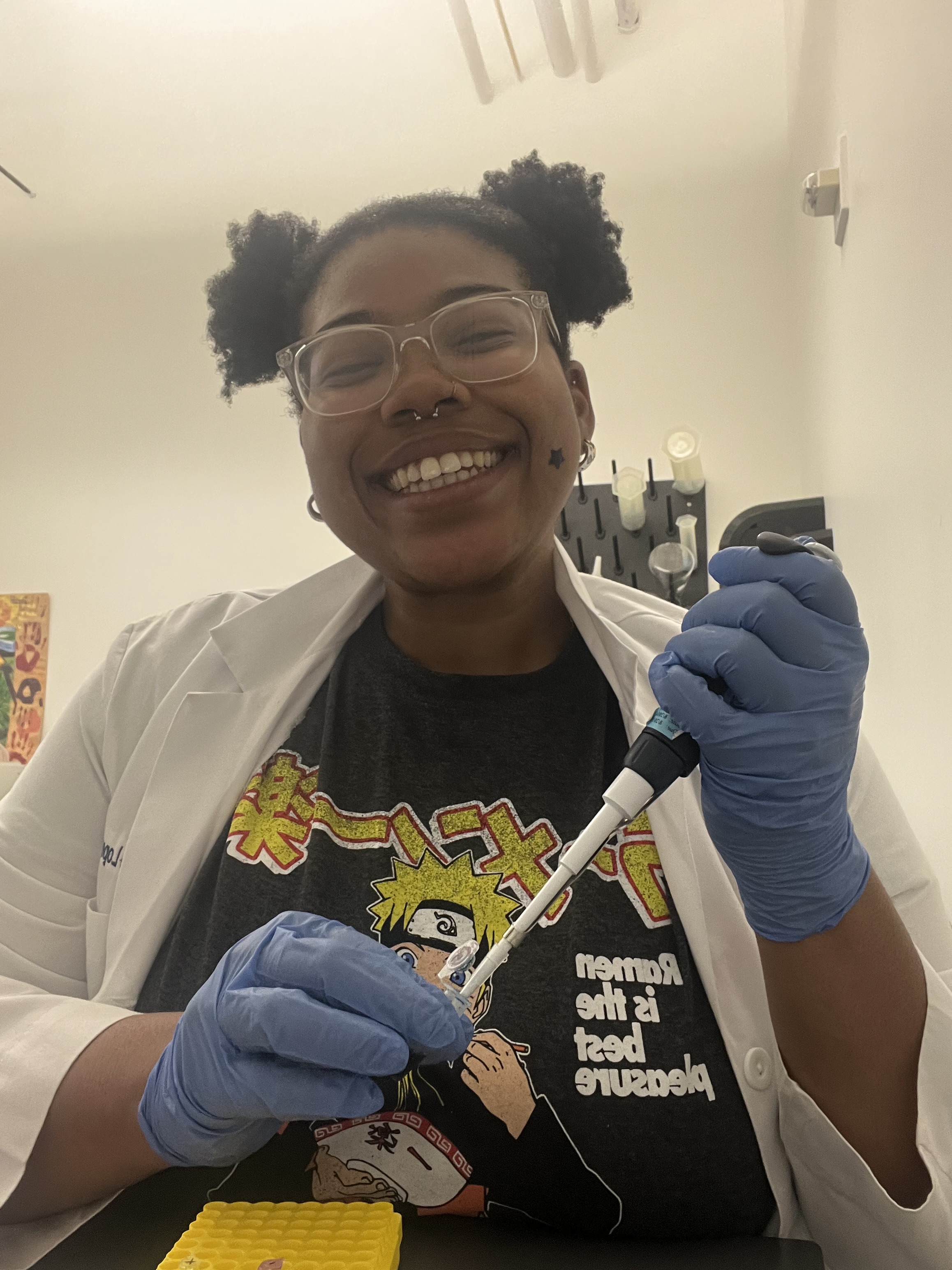 Kennedie Cockrell – I am currently pursuing a Master of Science in Marine Biology. I earned my Bachelor of Science in Marine Biology from Florida International University, where I developed my passion for studying coral reef health. I am interested in understanding the ecological roles of coral hosts and their mutualistic symbionts, including zooxanthellae and microbial communities. Currently, I am investigating the spatiotemporal dynamics of algal symbiont communities in Southeast Florida octocorals to identify dominant symbiont types and examine how they shift across space and time. My ultimate goal is to become a coral reef ecologist and contribute to the development of effective restoration and conservation strategies to protect reef ecosystems in the face of climate change.
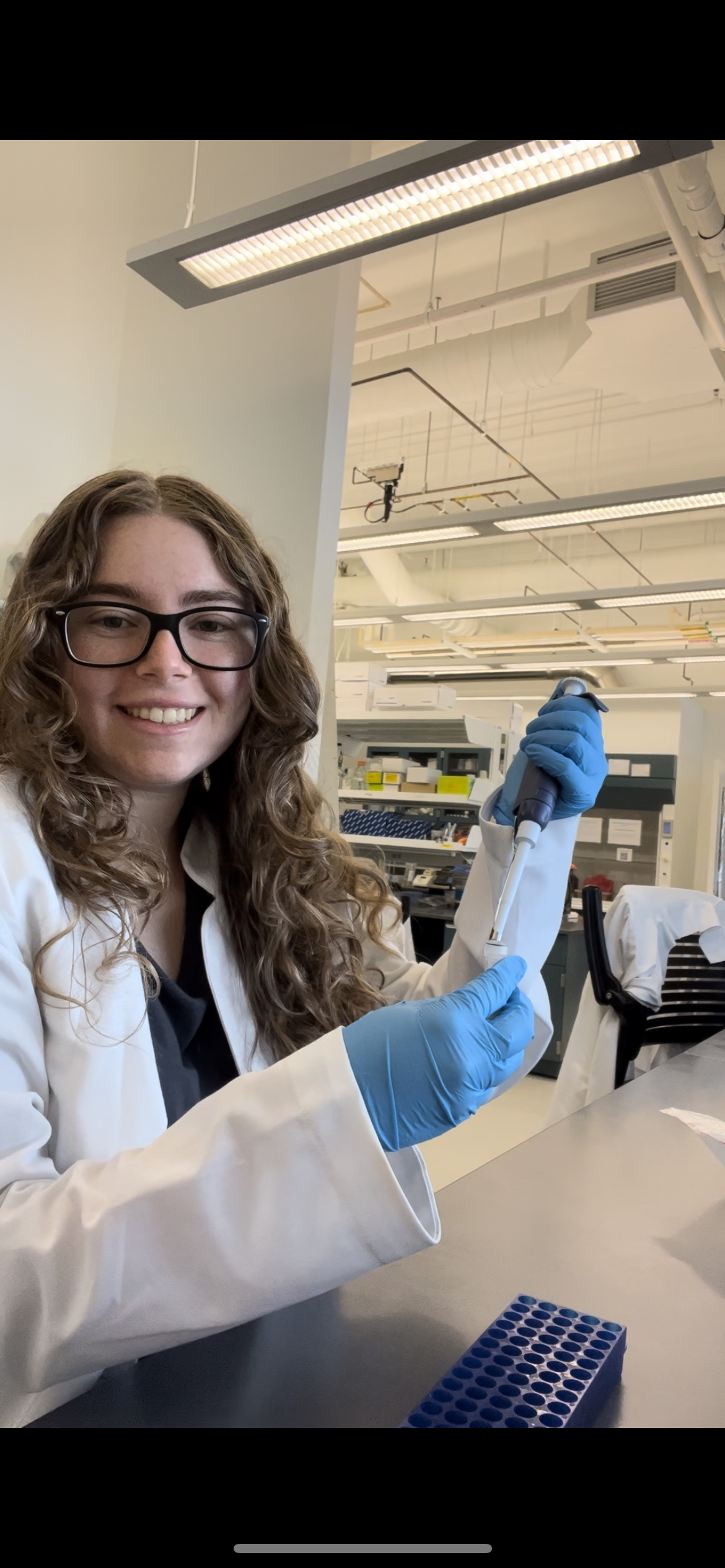 Hailey Poignant – I obtained my Bachelor’s degree in Biological Sciences at Florida State University. I am currently earning my Master’s degree in Biology with a concentration in research at NSU. During my first semester at NSU I took genomics with Dr. Lopez and I knew I wanted to work in his lab. Now I am a research assistant here working with Dr. Matias Gomez. My current project is my thesis which aims to examine the octocoral Briareum asbestinum after exposure toVibrio coralliilyticus to see if any changes in gene expression occur.

Pari Cribbins
I earned my B.S. in Biology from Pepperdine University. While at Pepperdine, I worked as a laboratory assistant in a General Ecology lab and a Genetics lab, and during the latter, I came to realize how much I enjoyed technical genetics lab work, which is part of what drew me to the NSU MMG lab. Now, I am a M.S. Marine Sciences student here at NSU and I am a recipient of the Brian Keller Memorial Fellowship Fund award. As a fellowship recipient, I am working on my thesis, which is titled “eDNA surveys for Dendrogyra Cylindrus (Pillar Coral) along the Florida Reef Tract”. D. cylindrus is an iconic species of stony coral in Florida but they have become increasingly rare in recent years due to various environmental stressors. eDNA, or environmental DNA, is defined as the genetic material that exists in bulk environmental samples like soil or water. In my research, I am working to develop a methodology using the eDNA present in water samples to detect D. cylindrus individuals on the Florida reef tract. I will be using two different approaches to process the eDNA I collect: eDNA metabarcoding and targeted single-species assays. The rarity of D. cylindrus in Florida makes it an ideal candidate for detection with eDNA surveys and the development of a successful eDNA methodology for D. cylindrus detection would be incredibly useful for informing and guiding continuing monitoring efforts of this rare coral.

Athena Capetanakis
I earned my Honors Bachelor’s of Science degree from the University of Toronto, where I completed a double major in Biology for Health Sciences and Psychology. I have long since known that I wanted to move to Florida from Canada, so I started researching genetics labs in the south Florida area. Dr. Lopez’s Molecular Microbiology and Genomics Lab quickly stood out to me. I am currently in the process of obtaining a Master’s in Biological Sciences with a research concentration. My thesis is titled “The Characterization and Detection of Human Associated Pathogens Within Aquatic Sediments in Florida.” The goal of my thesis is to use 16S rRNA sequencing to characterize the microbial profile of aquatic sediments, with a specific concentration on the New River. I will also be testing the sediment for the presence of HF183, which is a 16S rRNA gene sequence marker that is naturally found in Bacteroides genome of the interstitial tracks of humans. This DNA marker is ideal for identifying human fecal pollution in recreational waters that have been correlated with thalassogenic diseases. As for present knowledge, evidence of HF183 within the sediments of South Florida has not been previously tested. I have also been hired full time as a graduate research assistant working under the South Florida Water Management District and the Army Corps of Engineers. We are investigating how a hydrogen peroxide treatment, that targets the harmful cyanobacterial algal blooms in Lake Okeechobee, may affect the success of the microbiome present.

Paisley Samuel
I received my Bachelor’s degree in Marine Biology with minors in Marine Ecology and GIS at NSU. I’m currently finishing up the Master’s degree in Marine Science program here at NSU. I started out as a temporary research assistant in Dr. Lopez’s lab, helping out with a cyanobacterial harmful algal bloom (cyanoHABs) project funded by the Army Corps of Engineers. Now as a full-time research assistant in the lab, my current thesis project investigates how the microbial community changes in Lake Okeechobee due to the cyanoHABs that occur in the lake. We assess these changes through molecular taxonomy analyses using 16S gene sequencing. After assessing the microbial composition of the lake, we then look for any specific heterotrophic bacteria taxa that appear to change in accordance with the cyanoHABs as they occur.
See Paisley describe her research and time at NSU in this video
Staff and Undergraduates
We are indebted to several individuals who have worked or volunteered in the laboratory as temporary, grant-funded staff or undergraduates looking to gain practical lab experience. Until we can get proper bios, there names are listed below.
Nina Pruzinsky
Catherine Bilodeau
Christian Rodriguez
Kristen Olenchak
Anna Volter
Celeste Banfill
Elena Grosu
Amanda Haussman
Bryce Parrish

 Lopez Lab @ NSU